Bridging to Universal Design for Learning
About a year ago, I became Developmental Writing Coordinator at UNE. Although I have many years of writing instruction, I felt that I needed to refresh my skills, particularly around accessibility. Much of my prior position focused on regularly updating my tech skills, but those skills were focused on a wide audience (anyone and everyone in the University), and I have been wanting to learn more about Universal Design for Learning (UDL) for awhile. So, I took a graduate-level course to build my knowledge and learn more about the ways UDL is being applied in schools today. In my prior experience taking grad courses in Education, many of the class participants have been K-12 teachers. I have learned much from them to enrich my own practice, but I have also found it challenging to apply some of the concepts or activities since my teaching situation is generally dissimilar. I now work exclusively one-to-one with students, usually in my office as opposed to a classroom. Nevertheless, as in the past, I learned about teachers’ experiences in the K-12 schools that preface my experience with their graduates as they integrate into college.
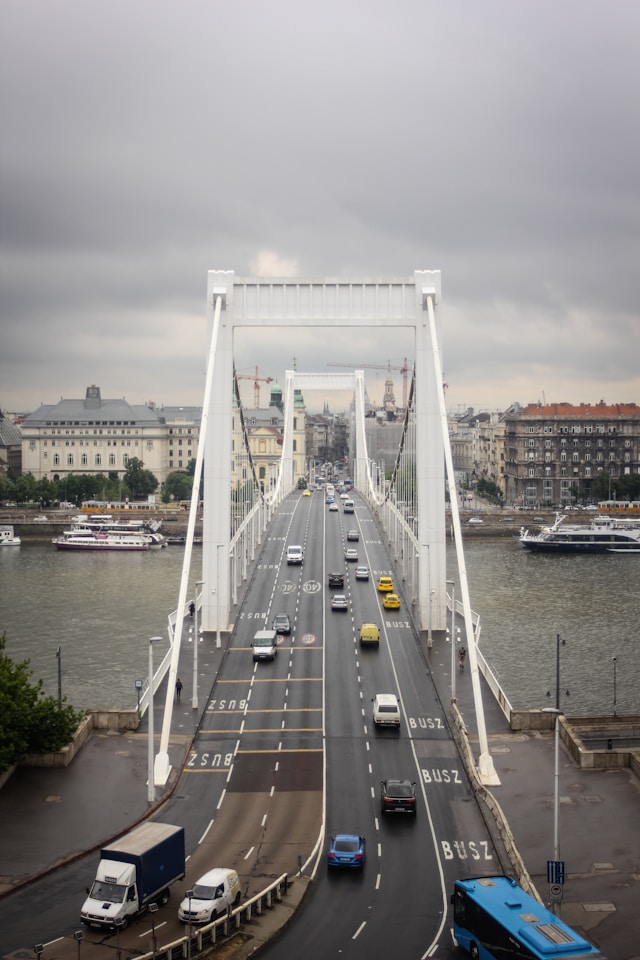
UDL brings unique challenges to higher education because it requires flexibility in both delivery of instruction and assessment. A core concept of UDL is designing: designing for student choice, flexibility, rigorous goals, metacognition, and success for all students. Rather than designing a lesson or unit in one way (one activity, one means of communicating, one way of demonstrating understanding), the designer anticipates multiple ways to allow maximum student engagement. For example, resources and demonstrations of learning are available in multiple forms (audio, visual, textual). I came to think of UDL as a bridge that is designed for maximum flexibility. Moving across the Budapest bridge (pictured below), people could easily drive a car, take a bus, or wheelchair, bike, rollerblade, or scooter across. Or they could run, stroll, walk, or push a carriage across that same bridge. All options are available to any person wanting to get across. To me, this is what makes UDL so powerful — accessibility allows every learner to achieve using the method that works best for them in that situation, and all learners are given the option to experiment. UDL’s stated goal is learner agency, so this level of choice empowers student choice. As I continued to consider UDL, I decided that I would also like to know more about Instructional Design. Recently, I completed a UNE Online Instructional Design certificate course, where I continued to develop multimodal resources for my course, and I learned about additional tools available in Brightspace.

In higher ed, students often live in an ecosystem of experiences where their learning is measured in a variety of ways but without much choice on their part. I cannot control the pressures and discipline-specific expectations on students, but I am working to design in ways that offer students tools for navigating and accessing resources. For example, I can control the learning environment (my office) to give them choice about their chair, the lighting, the temperature, and a variety of supplies that are on hand and ready to be used, such as sticky notes or highlighters. In higher ed, most faculty do not have the luxury of leaving supplies in their shared classroom, but they are able to offer multiple ways of presenting information, designing activities, and assessing student understanding. Realistically, sometimes they do not. They may be preparing students for standardized tests or assessing their work in a way that is consistent with the discourse of their discipline. But, as we work to incorporate tools to improve teaching and learning, keeping UDL at the forefront of course design will provide a more equitable space for all learners to succeed — and for professors to engage in new and interesting ways with their students.
To learn more about UDL standards, visit CAST’s Universal Design for Learning.


